THE DECISION, CLEARLY
Marble brings natural character but reacts to acids; granite varies from slab to slab; engineered quartz still needs heat precautions. Choose with your cooking habits and the complete installed detail in mind.
A worktop is one of the most touched surfaces in a home. It meets water, food, utensils, cleaning products and hot cookware every day. A beautiful slab deserves consideration, but the right choice also depends on how you cook and how much maintenance you are willing to accept.
When comparing marble, granite and quartz in Egypt, ask for the exact material identity and product information. A trade name or colour description may not tell you whether a slab is natural stone, engineered quartz or another manufactured surface. Products sold under a broad “marble” label can have different properties.
Three materials, different expectations
| Material | Why people choose it | What to discuss before buying |
|---|---|---|
| Marble | Natural veining and a distinctive, evolving surface | Acid sensitivity, finish changes and a suitable care routine |
| Granite | Natural pattern and a broad range of practical options | Variation between slabs, absorption and treatment requirements |
| Engineered quartz | Consistent design options and relatively simple everyday care | Heat precautions, approved cleaners and product-specific restrictions |
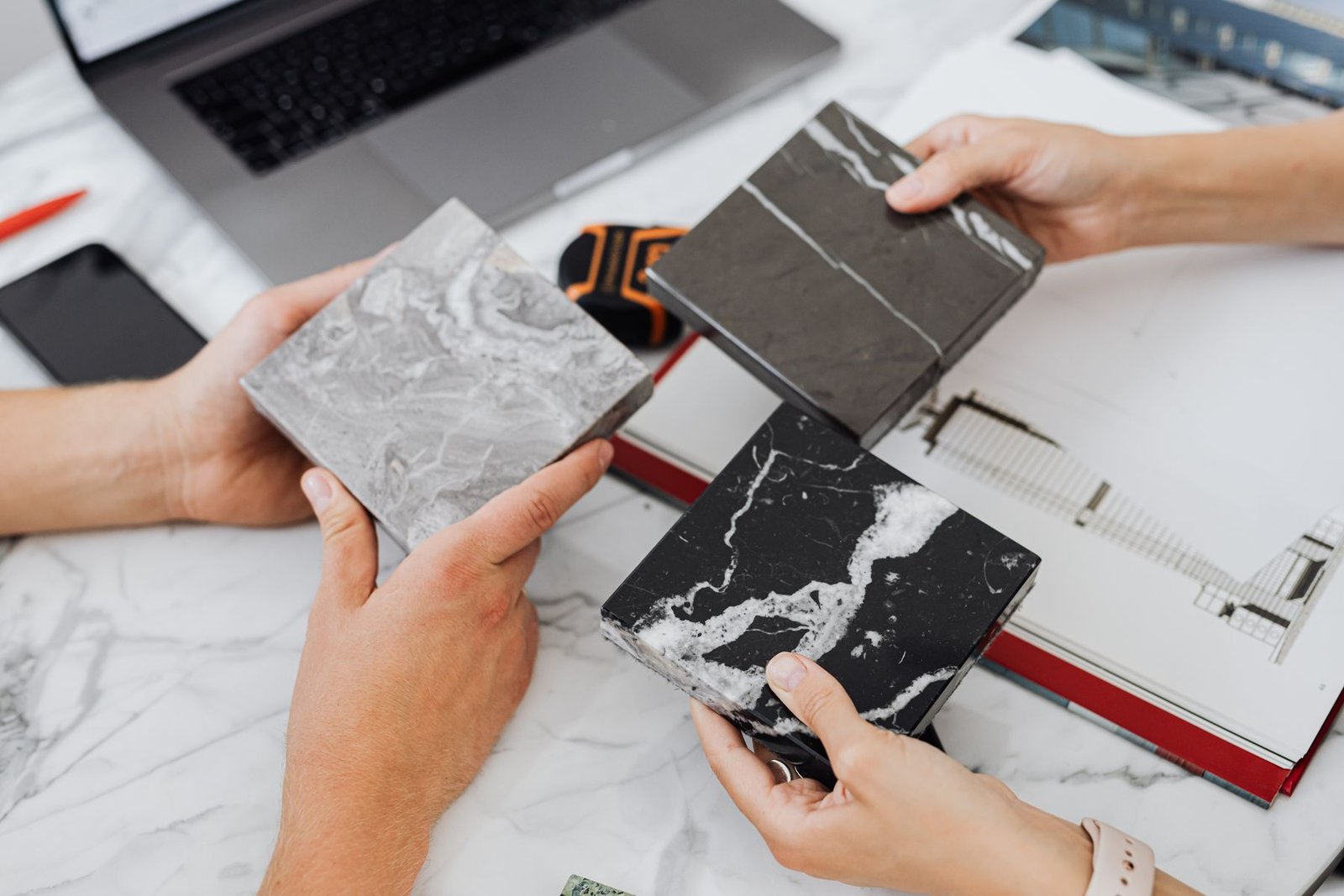
These are starting points, not guarantees for every slab. Ask the fabricator to explain the exact product and provide written care instructions. Judge a large sample or actual slab under lighting similar to your kitchen.
Understand stains and etching
Marble can react to acidic substances such as lemon juice or vinegar. The resulting dull mark is an alteration of the surface, not simply dirt that a stronger cleaner will remove. A stain is a different problem. An impregnating treatment can reduce absorption for a suitable stone, but it does not turn marble into an acid-proof surface.
This does not make marble a poor design choice. It means choosing it knowingly. Someone who enjoys the character of a changing natural surface may feel differently from someone who expects a uniform appearance after heavy daily cooking.
Quartz still needs sensible care
Engineered quartz is not the same as natural quartzite. Follow the selected brand’s care guide and use a trivet for hot cookware. Do not interpret “heat resistant” as permission to put a hot pan directly on the worktop. Product ranges also differ in whether they are approved for outdoor exposure.
For every material, agree an everyday cleaning routine with the supplier. Check cleaner compatibility with the exact finish and test a new product in an inconspicuous area as directed.
The details can matter as much as the slab
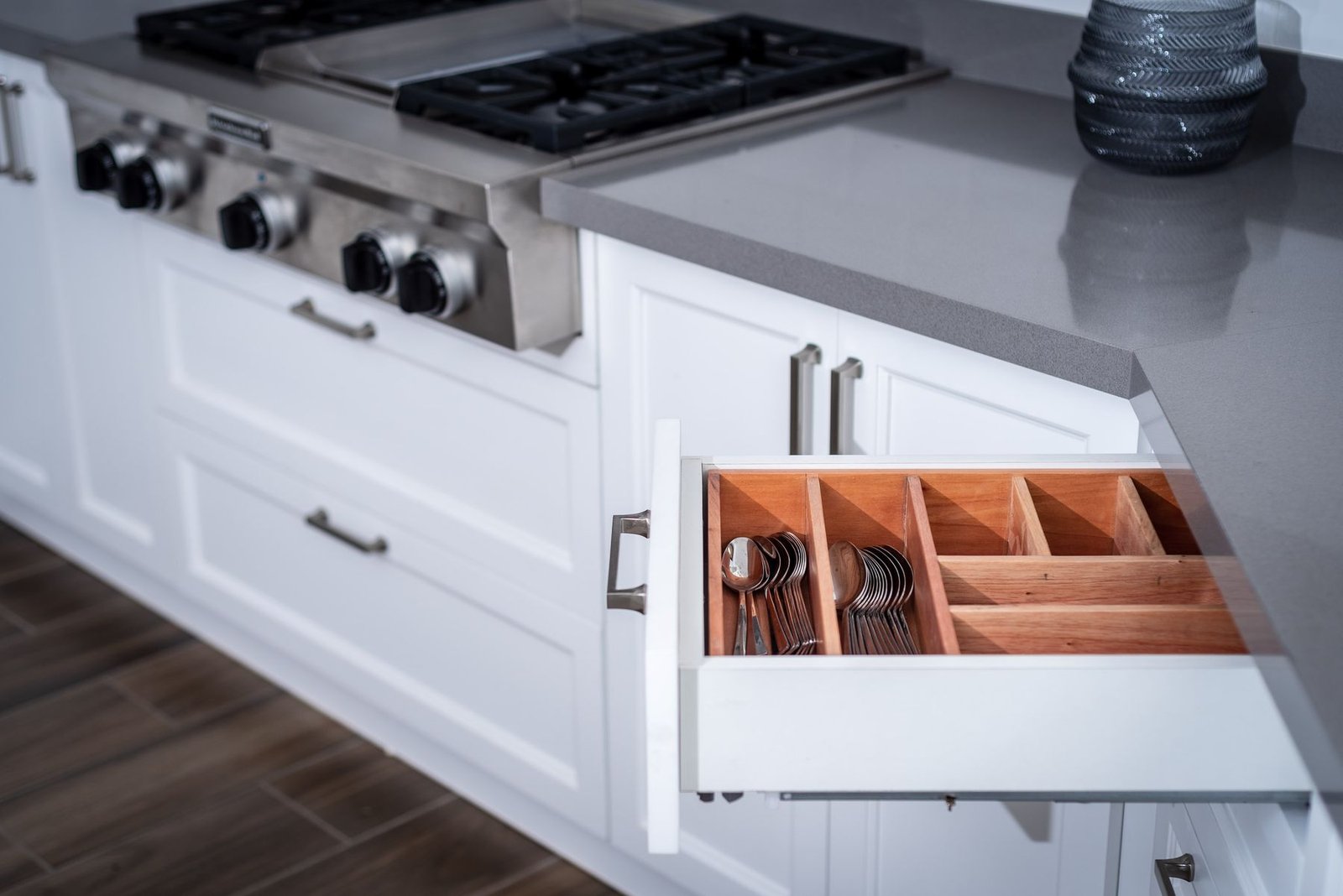
Review the sink cut-out, hob opening, exposed edges, joints and any overhangs with the fabricator. Confirm how the slab will be supported and how its weight is coordinated with the cabinet design. Large pieces also need a feasible delivery route into the property.
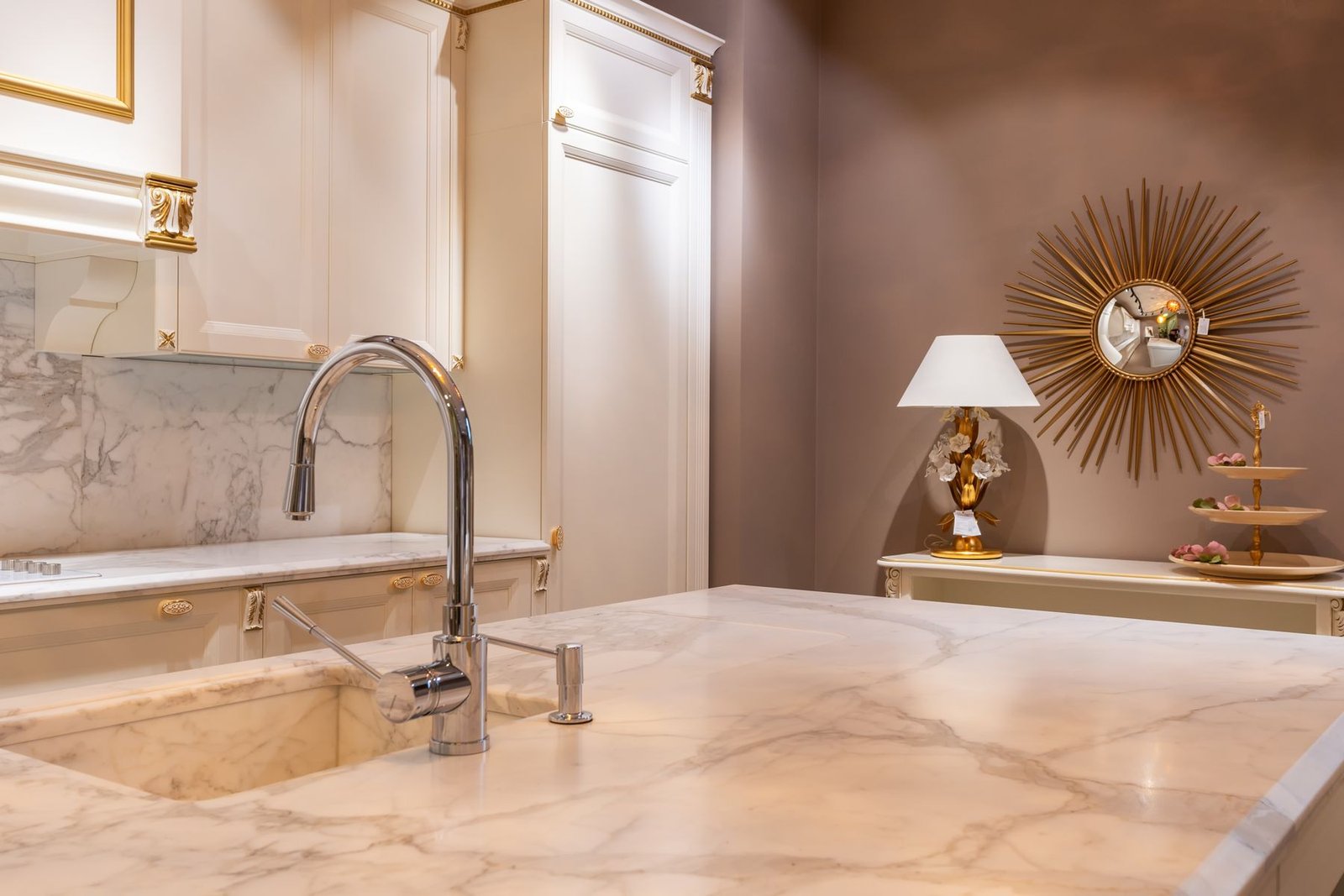
For prominent veining, approve the cutting layout before fabrication. A small sample cannot show where a seam will interrupt a pattern or how the island will relate to the backsplash. Record the agreed finish, edge profile, thickness and visible joint locations.
Compare a complete quotation
- Identify the exact slab or manufactured product code.
- Separate material supply, fabrication, cut-outs and installation.
- Include edge work, upstands or backsplash pieces where required.
- Confirm treatment, cleaning and maintenance instructions.
- Ask how damage, installation defects and aftercare are handled.
Do not choose from colour alone. Try the sample beside your cabinet door, floor and paint in daylight and at night. A balanced material palette often depends on how these surfaces meet rather than on any one expensive finish.
Common questions
Is granite maintenance-free?
No natural stone should be assumed maintenance-free. Ask whether the selected slab needs treatment and how to determine when further care is necessary.
Which worktop is cheapest?
Compare current quotations for the exact product and design. Thickness, edges, cut-outs, access and fabrication can change the installed total substantially.
Can porcelain also be used as a worktop?
Some porcelain slab products are designed for this application. They need their own fabrication, support and edge-detailing requirements; a floor tile specification is not enough.
YOUR NEXT STEP
Bring the kitchen palette together.
Share your kitchen plan and the cabinet finishes you are considering. We can discuss the worktop, backsplash and edges as one coordinated design.
Useful to include: sink and hob positions, preferred samples and your daily cooking routine.