THE DECISION, CLEARLY
Protect useful circulation, fit furniture to measured dimensions and place storage where daily routines need it. A smaller apartment benefits from fewer, better-resolved decisions.
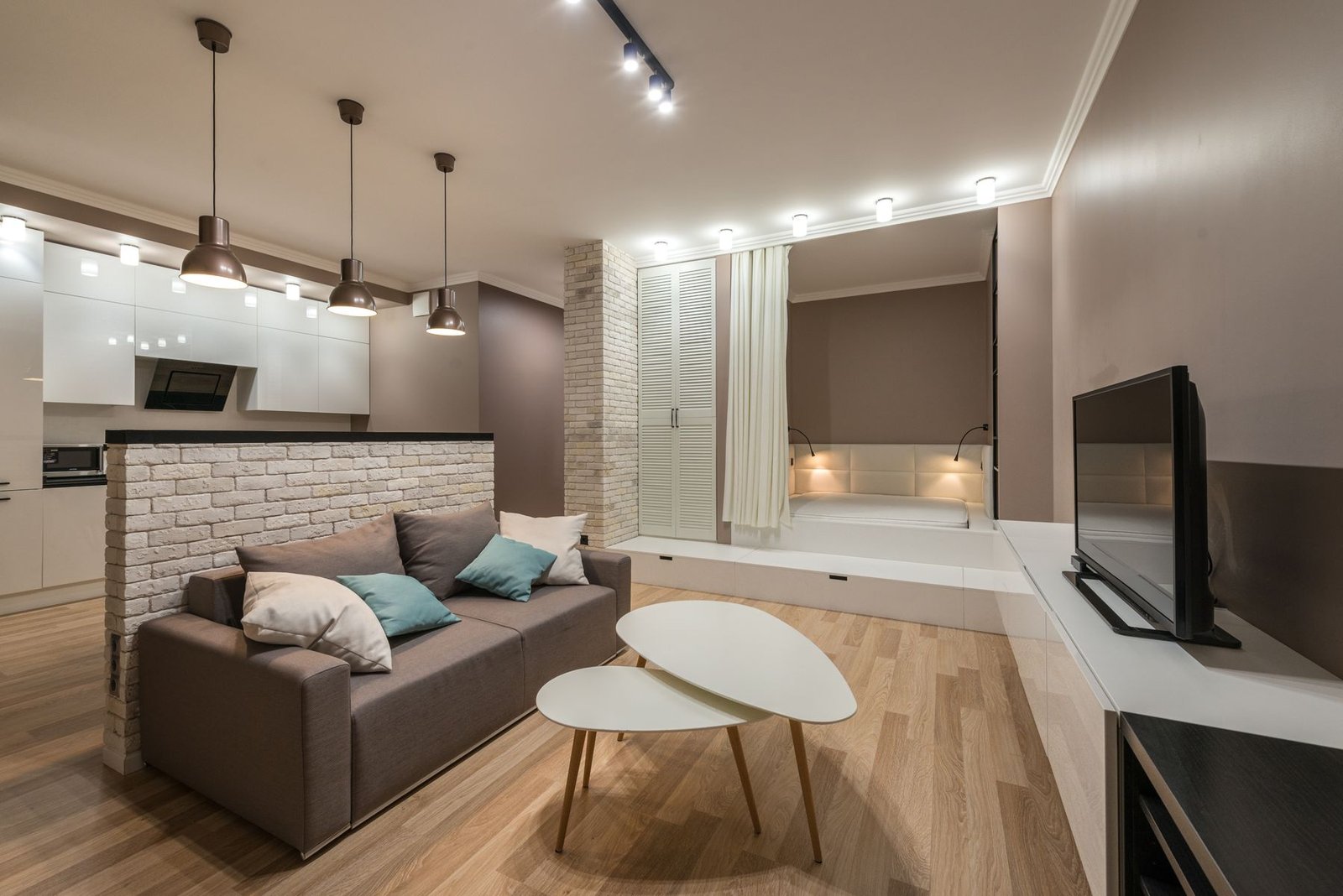
Small apartment design is less about making a room look larger in a photograph and more about making it work comfortably every day. A home can feel crowded because the furniture interrupts movement, essential storage is missing or too many activities are competing for the same corner.
Before choosing a modern, Scandinavian, Japandi or new-classic direction, identify those practical pressures. Style becomes more convincing when it supports a layout that already works.
Write a brief based on routines
List who uses the apartment, where work or study happens, how often guests visit and what needs storing. Count the things that currently have no home: shoes, cleaning equipment, suitcases, paperwork or children’s belongings. These are design requirements, not details to solve after furnishing.
Draw the room with the intended furniture at its actual size. Include open doors and drawers, chairs pulled back and the route between rooms. A smaller sofa is not automatically better if it does not seat the household; sometimes fewer, better-proportioned pieces make more sense.
Give each area a clear job
| Area | A useful design question |
|---|---|
| Entrance | Where do shoes, bags and keys go without blocking arrival? |
| Living room | Can people pass through without crossing the main seating group? |
| Dining | How will chairs move when the table is in use? |
| Bedroom | Can storage open while the room remains comfortable to move through? |
| Work corner | Where do power, task light and paperwork belong? |
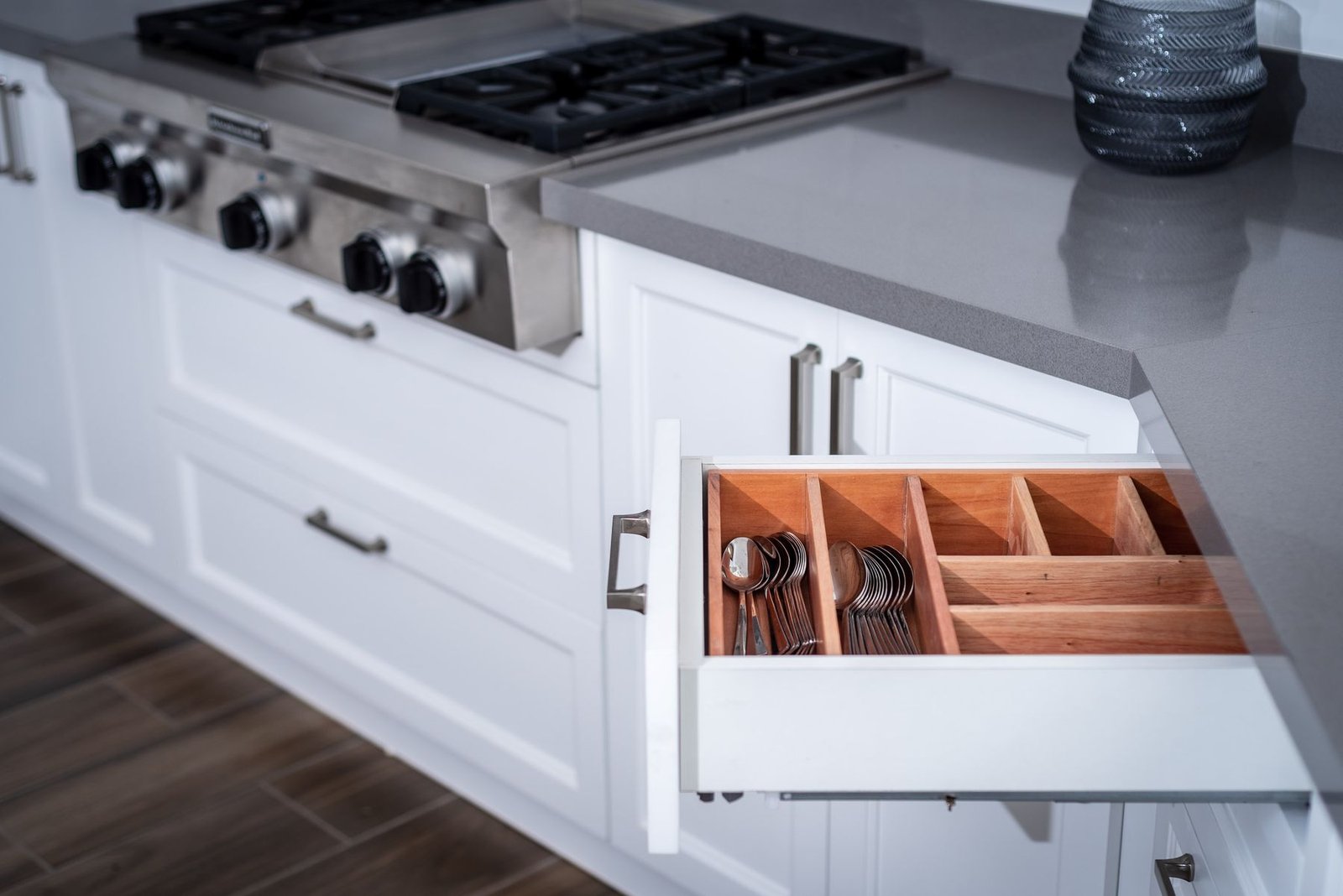
| Kitchen | Can appliances and drawers operate together without clashes? |
Use these questions to test alternatives. Moving a single storage wall or changing the dining position can be more useful than adding a decorative feature to an unresolved plan.
Choose storage that fits the contents
Built-in furniture can make awkward spaces useful, but it should be designed around what it stores. Deep shelves can hide objects you use daily; a tall cupboard may need a safe way to access its upper section. Closed storage often reduces visual clutter, while a few deliberate open shelves can give the room character.
Multi-purpose furniture also needs a reality check. If a sofa bed requires moving three other pieces every night, it may not be the convenient solution it appears to be. Test the change between functions, not only the closed position.
Use a coherent material palette
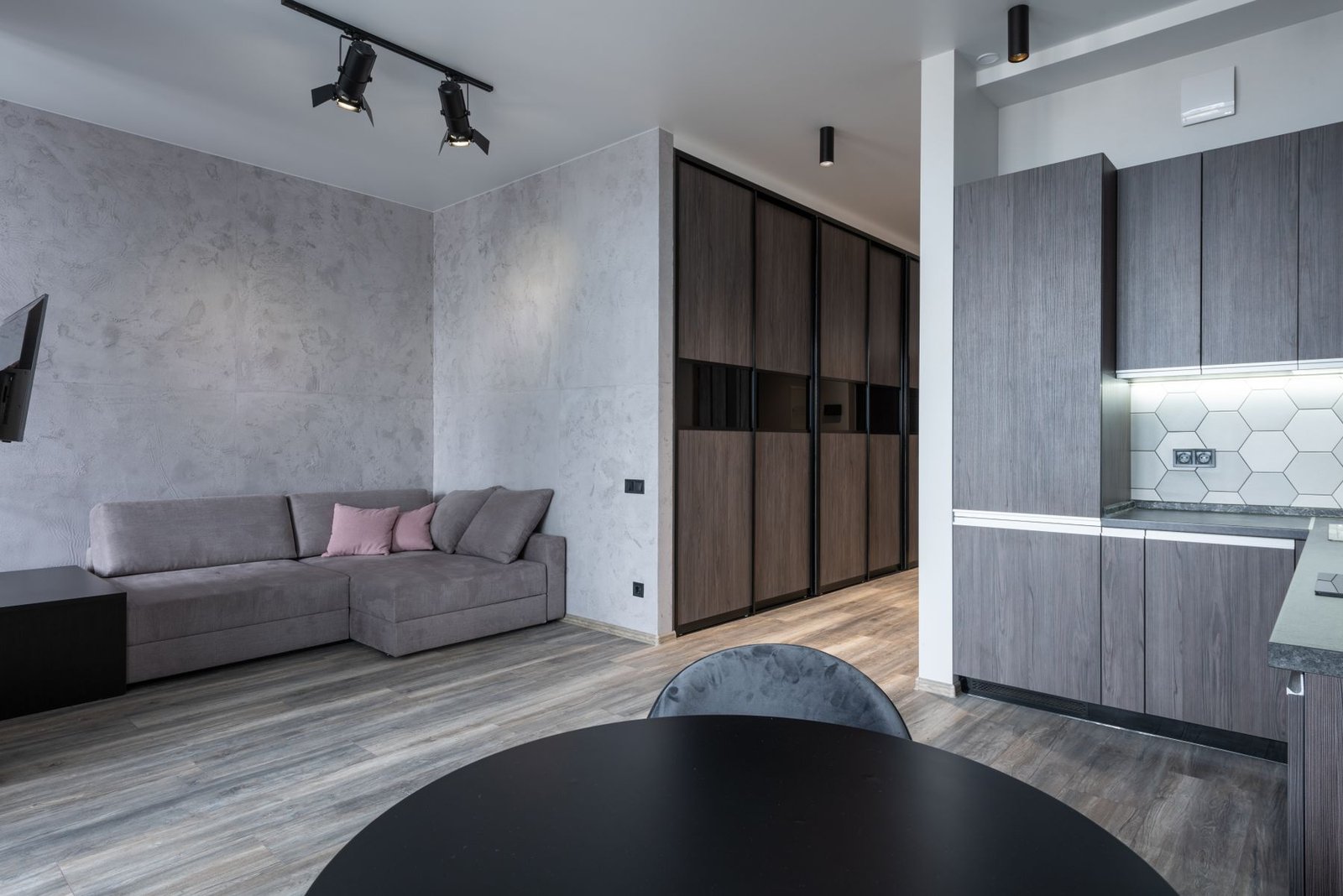
A limited family of colours and finishes can help connected spaces feel composed. That does not mean every small home must be white or beige. Darker tones can work where daylight, lighting and proportions are considered. Review samples in the actual room rather than assuming a paint name guarantees a particular effect.
Mirrors should reflect something worth seeing and avoid uncomfortable glare. Curtains should operate freely, and rugs should reinforce the furniture grouping rather than become obstacles. These choices work best after the layout is settled.
Keep light and movement visible
Avoid blocking useful daylight with unnecessary bulk. Combine general illumination with task lighting where activities need it. Plan sockets around actual furniture positions so extension leads do not become part of the finished room.
Do not remove a wall simply because an open-plan image looks appealing. Structure, building services, privacy, sound and cooking habits all deserve review. A measured change to one opening may be more appropriate than opening every space.
Common questions
Is modern design the only option for a small apartment?
No. Many styles can work when furniture scale, detailing and circulation are considered. Choose the atmosphere you enjoy and adapt the expression to the room.
Should all furniture be custom-made?
Not necessarily. Use custom pieces where they solve a specific constraint; combine them with well-sized standard furniture when that gives a better result.
Where should I start if the budget is limited?
Start with a measured furniture plan and a storage list. Resolve the daily frustrations before spending on decorative additions.
YOUR NEXT STEP
Find more possibility in the space you have.
Share your apartment plan and the furniture or routines you want to keep. We can discuss layout, storage and lighting together before you commit to purchases.
Useful to include: the number of occupants, work-from-home needs and the rooms that feel most restricted.